

Commercial HVAC Keeps Your Building Comfortable, Efficient, and Open
Commercial HVAC is the equipment that heats, cools, ventilates, and manages humidity in business spaces. For a busy property manager, the practical priority is simple: use a properly sized system, schedule service at least twice a year, and work with a qualified provider who can spot small issues before they become costly downtime.
A strong commercial HVAC plan helps you:
- Keep tenants, staff, customers, and equipment comfortable
- Lower energy waste from dirty coils, airflow problems, and worn parts
- Support code compliance and safer building operation
- Plan repairs and replacements instead of reacting to emergencies
The right system depends on your building’s load, layout, occupancy, ductwork, electrical service, and heating needs. Packaged rooftop units, split systems, gas-electric equipment, and heat pumps can all be good choices when they are selected and installed for the site.
Elliott Electric provides commercial HVAC, electrical, lighting, and plumbing solutions for businesses in South Boston and Danville, Virginia. Our multi-trade experience helps property managers coordinate critical building systems with less contractor overlap and clearer accountability.
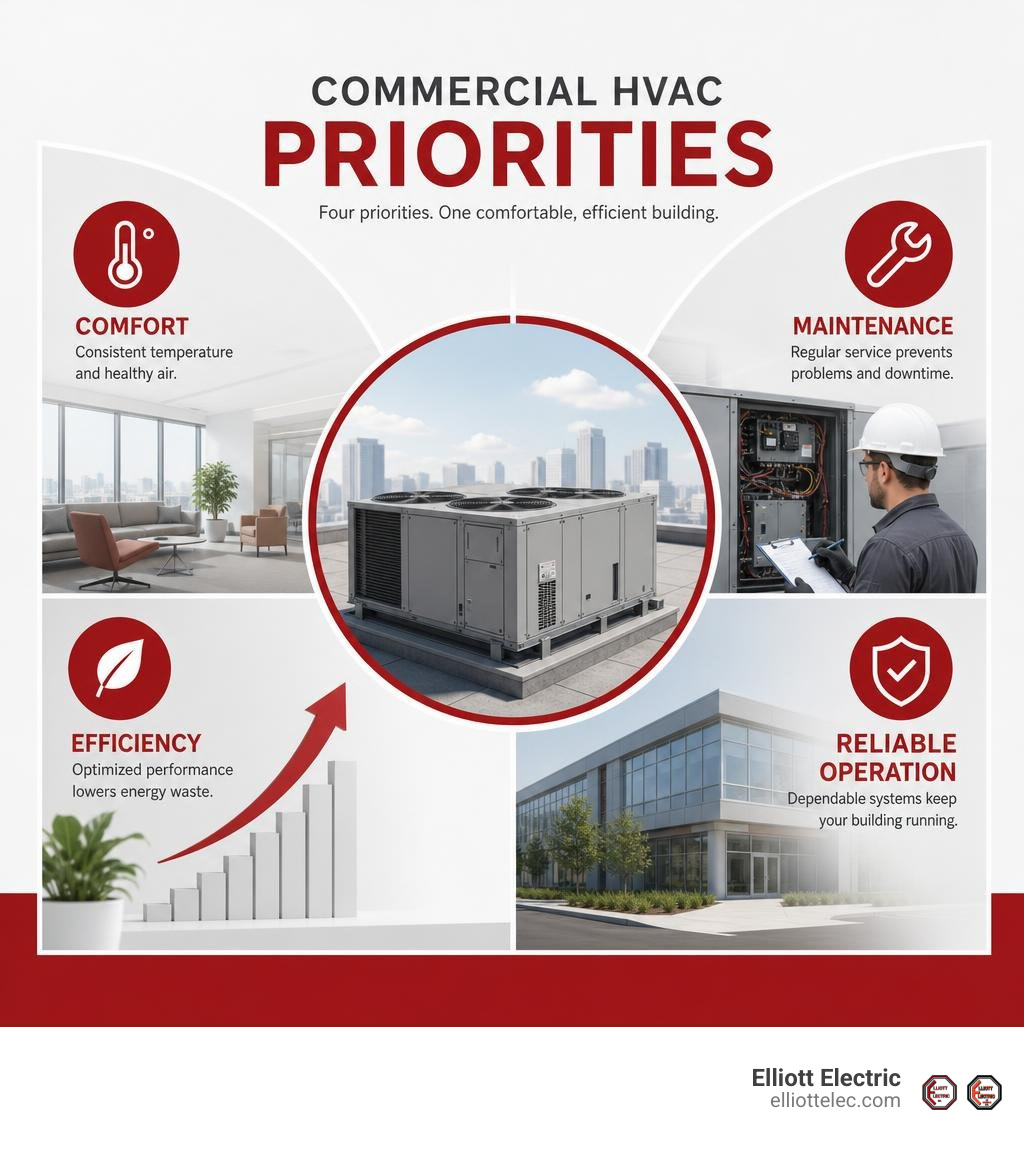
Simple guide to commercial hvac terms:
Understanding Modern Commercial HVAC Systems and Equipment Types
Every commercial property has unique architectural demands, internal thermal loads, and daily operational schedules. Choosing the right heating and cooling setup requires matching your physical building layout with an equipment profile that balances initial capital expense against long-term operational efficiency.
Commercial systems generally fall into three major design categories:
- Packaged Rooftop Units (RTUs): These self-contained systems house all heating, cooling, fan, and air filtration components inside a single outdoor cabinet. Usually mounted on the roof, they save indoor floor space and keep loud mechanical noise away from work areas. Modern lines offer options like low-GWP refrigerants, advanced coil designs, and variable-speed blowers.
- Commercial Split Systems: Split setups divide components between an outdoor condensing unit or heat pump and an indoor air handler or furnace. They are ideal for low-rise commercial structures, multi-level offices, or historic retrofits where roof weight limits make a heavy rooftop unit impractical.
- Variable Refrigerant Flow (VRF) Systems: VRF systems deliver refrigerant directly to multiple indoor fan coil units placed throughout separate building zones. By modulating refrigerant flow dynamically, these units can heat one zone while cooling another, making them popular for office complexes, hospitality settings, and medical facilities.
When evaluating reliable commercial HVAC company services, it helps to weigh how each system handles installation requirements, ongoing maintenance, and zoning control:
| System Type | Best Application | Key Advantages | Space & Structural Needs |
|---|---|---|---|
| Packaged Rooftop Units (RTUs) | Retail centers, restaurants, single-story offices, warehouses | Self-contained design; zero indoor footprint; easy rooftop service access | Requires structural roof curb support and direct roof duct penetrations |
| Commercial Split Systems | Small offices, strip malls, mixed-use buildings, historic properties | Flexible equipment placement; lower roof weight load; standard duct matching | Requires dedicated indoor mechanical room/closet and outdoor ground pad |
| Variable Refrigerant Flow (VRF) | Hotels, multi-tenant offices, healthcare facilities, schools | Independent zone temperature control; high part-load efficiency; quiet operation | Minimal ductwork; requires dedicated refrigerant line piping networks throughout zones |
Packaged Units vs. Commercial Split Systems
Choosing between a packaged unit and a split system usually comes down to structural load limits, indoor footprint constraints, and your ductwork layout.
Packaged units simplify installation because refrigeration lines are charged, sealed, and tested at the factory. This eliminates extensive on-site refrigerant piping. For businesses looking for an all-in-one heating and cooling solution, units like the Daikin 3 Ton 14 SEER2 Commercial Gas Package AC 70K BTU 460V 3-Phase R32 provide heating and cooling in a compact, convertible airflow cabinet that fits rooftop or ground-level placements.

Commercial split systems, such as a 4 Ton 15 SEER2 / 11.7 EER2 Trane Commercial Split Heat Pump System – 460V 3 Phase – R454B – Two Stage, offer flexibility when roof access is limited or indoor air handlers must be mounted in upflow, downflow, or horizontal configurations. To evaluate the best setup for your facility, review our business owner’s guide to commercial air units.
How to Size a Commercial HVAC System for Your Facility
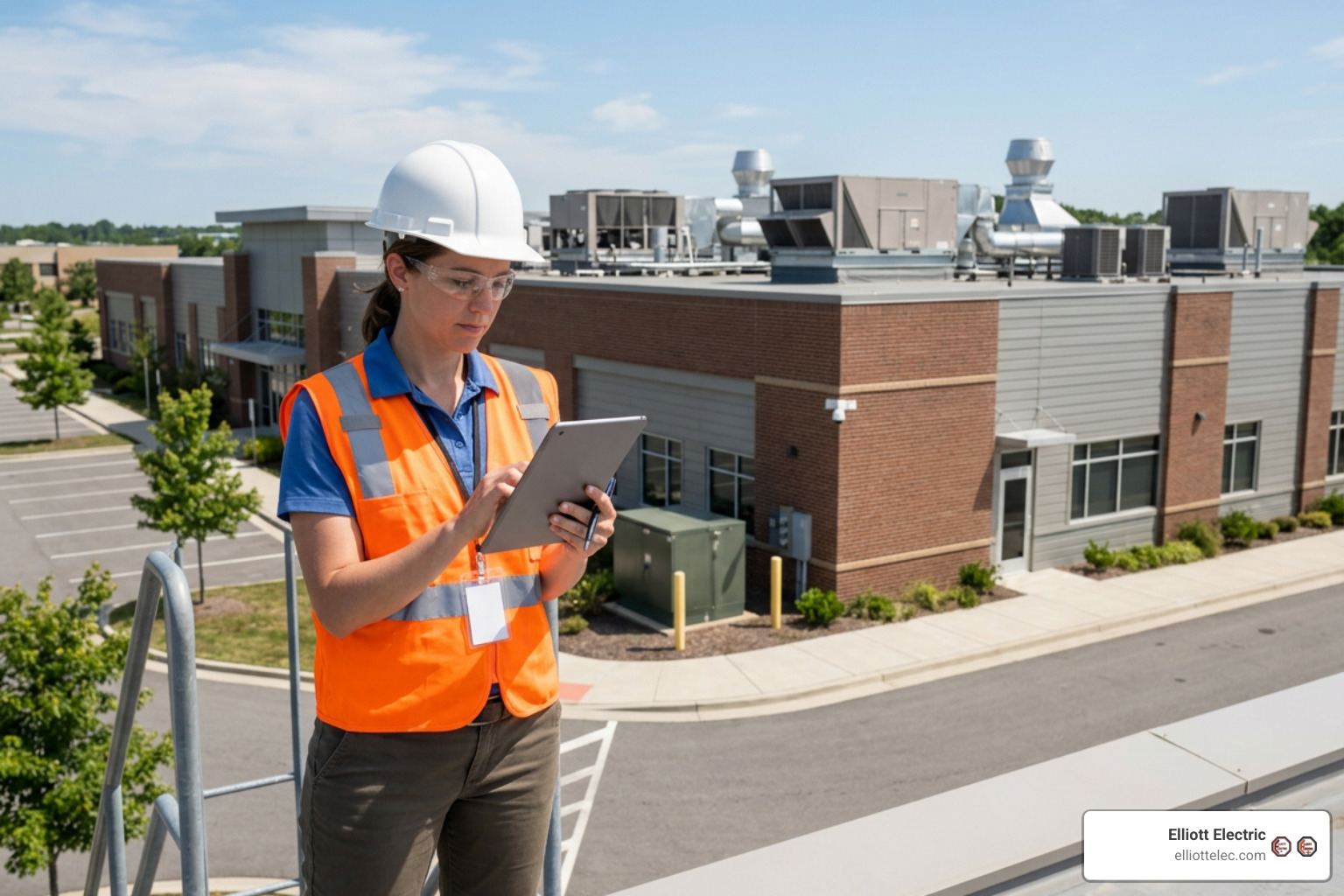
Guessing system capacity based solely on square footage is a common and costly mistake in commercial facilities. Oversized equipment cools a space too quickly without running long enough to remove humidity, leading to clammy air, mold risks, and premature compressor wear from short-cycling. Undersized units run constantly, driving up power bills and failing to maintain comfortable conditions during hot summer afternoons.
Proper commercial equipment sizing requires an engineering load calculation (such as ACCA Manual N standards) that accounts for:
- Building Envelope Characteristics: Insulation R-values in roofs, walls, and foundations.
- Fenestration and Solar Heat Gain: Window orientation, glass tinting, and Solar Heat Gain Coefficients (SHGC).
- Occupancy Patterns: Number of occupants, operating hours, and customer traffic volume.
- Internal Equipment Heat Loads: Heat generated by computers, commercial kitchen equipment, industrial machinery, and lighting.
- Ventilation and Make-Up Air Codes: ASHRAE 62.1 requirements for fresh outdoor air intake to keep indoor air fresh and safe.
Energy Efficiency Standards: SEER2, IEER, and New Low-GWP Refrigerants
Energy standards have evolved significantly to reduce commercial power consumption and lower carbon emissions. Advanced designs, such as the Renaissance commercial product line, incorporate Variable Frequency Drives (VFDs) and specialized coil designs to cut energy use by more than 30% over older baseline equipment while reducing maintenance times.
Decoding SEER2, EER2, and IEER Metrics
Commercial efficiency ratings reflect different operating conditions:
- SEER2 (Seasonal Energy Efficiency Ratio 2): Measures seasonal cooling efficiency for light commercial units (typically under 5 tons) under updated testing conditions with higher external static pressure.
- EER2 (Energy Efficiency Ratio 2): Measures steady-state cooling efficiency under peak outdoor temperatures (95°F), showing how equipment performs on the hottest summer days.
- IEER (Integrated Energy Efficiency Ratio): The primary commercial metric for medium and large rooftop equipment (such as 7.5 to 12.5-ton units). It evaluates part-load performance across 100%, 75%, 50%, and 25% operating capacities.
Because commercial HVAC systems operate at part-load conditions for most of the year, higher IEER ratings directly lower monthly utility overhead. For example, high-efficiency options like the Trane 7.5 Ton 14.6 IEER Commercial Packaged Heat Pump Precedent Series | 208/230V 3 Phase – R454B – Single Stage – WSK090A3S or the Trane 12.5 Ton Commercial Packaged Heat Pump | 14.0 IEER | R-454B | 208/230V 3-Phase | Precedent provide significant energy savings for larger commercial footprints.
The Shift to Low-GWP Refrigerants (R-32 and R-454B)
Under the EPA AIM Act regulations, the commercial HVAC industry has transitioned away from higher Global Warming Potential (GWP) refrigerants like R-410A in favor of low-GWP A2L alternatives, including R-32 and R-454B.
R-454B offers a GWP of 466—less than a quarter of R-410A’s GWP of 2,088. Modern commercial units using these refrigerants feature integrated leak detection sensors, factory-sealed safety controls, and optimized heat exchangers to ensure safe, compliant operation.
Essential Commercial HVAC Maintenance and Troubleshooting

Commercial HVAC systems run under heavy daily workloads. Routine preventative maintenance keeps equipment operating close to factory specifications, prevents unexpected failures during extreme weather, and extends overall equipment lifespan.
A thorough commercial maintenance visit includes:
- Inspecting and tightening high-voltage electrical connections, contactors, and disconnect switches
- Cleaning outdoor condenser coils and indoor evaporator coils to maintain proper heat transfer
- Checking airflow balance and measuring blower motor amp draw
- Clearing condensate drain lines and pans to prevent water leaks and property damage
- Verifying safety controls, economizer operation, and programmable building thermostats
- Checking refrigerant charge and inspecting lines for leaks
To keep your mechanical systems running smoothly year-round, partner with our team for comprehensive commercial HVAC maintenance services.
Warning Signs Your System Needs Repair or Replacement
Recognizing early warning signs helps you address mechanical issues before they turn into complete system failures:
- Uneven Temperatures: Noticeable hot and cold spots across offices or retail floors often point to duct leaks, failing zone dampers, or airflow issues.
- Unexplained Energy Spikes: A sudden jump in cooling or heating costs typically signals dirty coils, low refrigerant levels, or a failing compressor.
- Strange Mechanical Noises: Grinding, squealing, or metal-on-metal sounds usually indicate worn blower bearings or a failing motor.
- Persistent Humidity: High indoor humidity or lingering odors mean the system is failing to dehumidify the air, often caused by short-cycling or bad airflow settings.
- Frequent Service Calls: If your repair history shows repeated component failures on a unit older than 12 to 15 years, replacement is often the more cost-effective choice.
Selecting a Qualified Commercial HVAC Service Provider
Commercial mechanical systems require specialized expertise that goes beyond basic residential service. When choosing a commercial contractor, look for:
- Full licensing, bonding, and dedicated commercial liability insurance
- Multi-trade capabilities across electrical, HVAC, and plumbing to avoid contractor coordination delays
- Transparent preventive maintenance agreements that include documented performance reporting
- Prompt emergency service capabilities to minimize business downtime
For commercial properties in Virginia and North Carolina, Elliott Electric delivers complete mechanical and electrical expertise. Learn more about our specialized commercial electrical and HVAC services in Danville, VA and our trusted commercial electrical and HVAC solutions in South Boston, VA.
Frequently Asked Questions About Commercial HVAC Systems
How often should commercial HVAC equipment be serviced?
Commercial systems should receive a full professional inspection and tune-up at least twice a year: once in spring before cooling season and once in autumn before heating season. Facilities with high dust levels, commercial kitchens, or 24/7 operating schedules should replace air filters quarterly or monthly to protect indoor air quality and maintain proper airflow.
How does routine maintenance reduce commercial operating costs?
Routine maintenance removes dirt from coils, maintains correct refrigerant levels, and keeps moving parts properly lubricated. Keeping systems tuned reduces compressor strain, improves overall heat transfer, and can lower annual heating and cooling energy use by 15% to 30% compared to neglected systems.
When should a commercial facility replace rather than repair an HVAC unit?
Replacement is generally the better financial decision if the equipment is over 12 to 15 years old, uses phased-out refrigerants, or requires a repair that exceeds 50% of the cost of a new unit. Upgrading to high-efficiency equipment with modern low-GWP refrigerants quickly delivers returns through lower monthly utility bills and reduced downtime.
Conclusion
Keeping your commercial building comfortable, energy-efficient, and code-compliant is vital for daily productivity and long-term property value. With over 75 years of multi-trade experience, Elliott Electric delivers dependable, code-compliant commercial HVAC, electrical, and plumbing solutions backed by our 100% satisfaction guarantee.
Whether you need a new rooftop unit, emergency repairs, or a structured maintenance plan for your facility in South Boston, Danville, or surrounding areas across Virginia and North Carolina, our team is here to help. Connect with Elliott Electric today to plan your next commercial facility project and keep your business running smoothly in every season.


